How to Build a Product Launch Press Kit That Journalists and Customers Can Use
Nov 12, 2026
New York City, New York Nov 12, 2026 (Issuewire.com) - A product announcement can reach many websites and still leave important questions unanswered. Journalists need evidence they can check. Customers need to understand what the product does, whether it suits them, and where to find reliable details.
Trust makes that preparation important. The Reuters Institute's 2026 Digital News Report found that 62% of respondents across its surveyed markets were concerned about fake online news. Your press kit cannot solve that wider problem, but it can make your own announcement easier to verify.
A practical launch kit contains four connected elements: a factual press release, a useful destination page, publication-ready media materials, and a distribution plan with honest reporting.
Prepare a Press Release With a Verifiable News Angle
Many launch announcements describe enthusiasm instead of change. The headline calls a product innovative, the introduction promises better results, and the executive quote repeats the same claims. A journalist still has to discover what happened and why readers should care.
Customers face a similar problem. They cannot judge whether "a smarter solution" offers a relevant improvement without knowing its capabilities, availability, and limitations. Promotional language creates extra work for both audiences.
We can use an imaginary irrigation supplier launching a soil-moisture sensor as an example. A weak announcement might read:
Irrigation Company Introduces a Revolutionary Solution for Modern Farming
A more useful illustrative headline would be:
Irrigation Supplier Launches Soil-Moisture Sensor for Small Farms
The second version identifies the organization's activity, the product, and the intended user. It gives a reporter a subject to assess without asking them to accept an unsupported judgment.
Establish the Facts Before Writing the Claims
Your team can prepare a short fact sheet before drafting the release. It should record what is launching, when it becomes available, where customers can obtain it, and which capabilities your evidence supports.
For the sensor, that might include supported irrigation systems, installation requirements, measurement specifications, and service availability. If compatibility varies between models, the announcement should explain that distinction rather than imply universal support.
Your product specialist can approve the technical facts while your communications lead checks the language. This division reduces the risk of turning a limited test result into a broad commercial promise.
The U.S. Federal Trade Commission's advertising substantiation policy requires a reasonable basis for objective advertising claims before publication. For a launch aimed at U.S. buyers, that is a useful reason to examine statements such as "reduces water use" or "outperforms other sensors" before including them.
A performance claim needs conditions, a method, and appropriate evidence. If you cannot support it, your release can describe the product's function instead. Explaining that a sensor reports soil moisture is more credible than promising savings your tests have not established.
The finished release can then present the announcement, explain its relevance, provide essential facts, and include an approved quote that adds context. The quote should explain a decision or customer need rather than repeat that the company is excited.
Build a Launch Page With Clear Information and Measurable Links
A release often sends readers to a homepage that does not mention the launch. Visitors then have to search through service menus or product categories to find the item they just read about. Some will leave, while others may contact your team with questions the page could have answered.
A dedicated launch page avoids that disconnect. For our irrigation supplier, it can explain the sensor's purpose, show the product in use, identify compatibility requirements, and state when it is available.
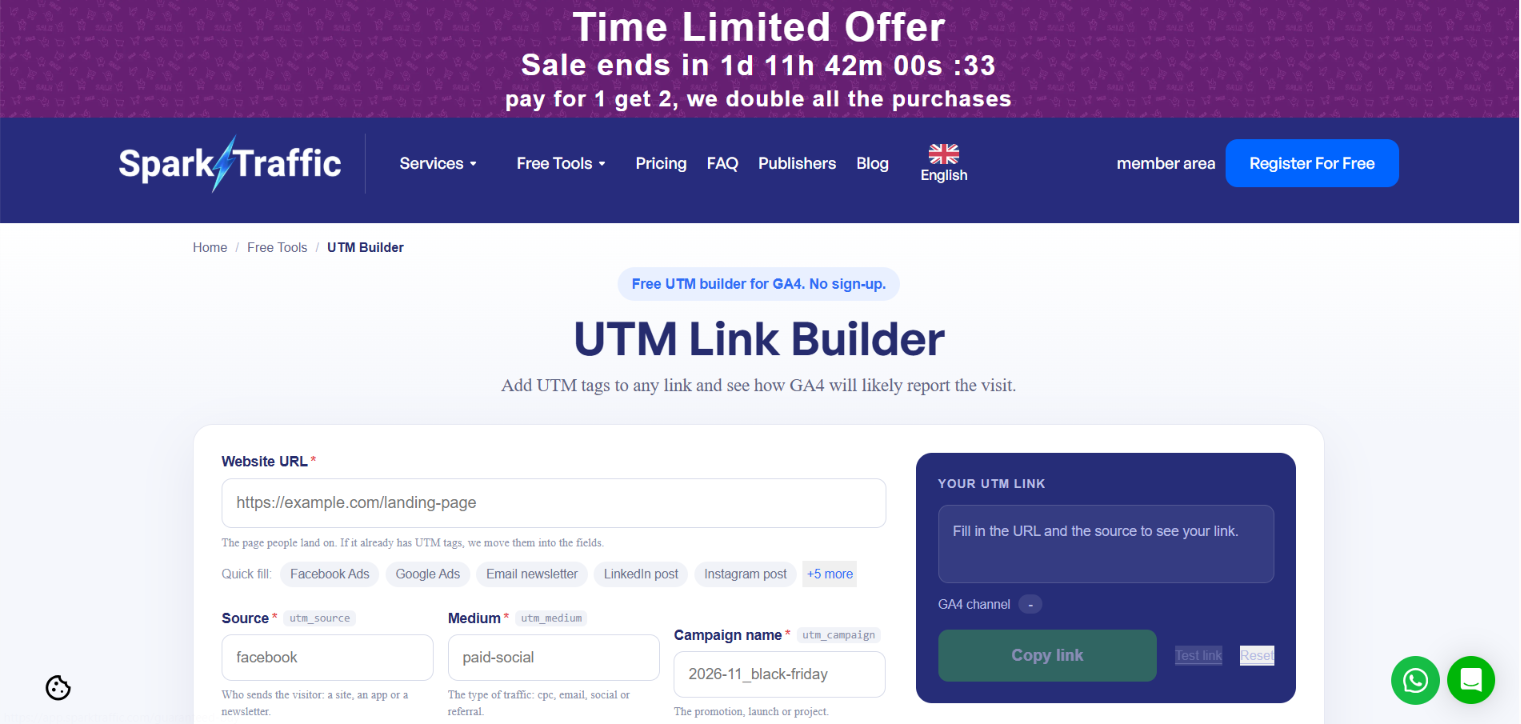
SparkTraffic is a website traffic platform that also offers tools for preparing campaign links. Its free, browser-based SparkTraffic's UTM Builder can help your team add consistent campaign labels to the launch-page links used in distribution.
UTM parameters are labels appended to a URL that compatible analytics tools can read. They help distinguish visits associated with a release placement, partner newsletter, or company social post, provided your analytics setup captures the information.
Give Buyers and Journalists Different Routes on the Same Page
A prospective buyer may want specifications, pricing information, or a demonstration. A journalist may need downloadable images, evidence, and a press contact. One page can serve both groups if those routes are clearly labelled.
Your main customer action could be "Request compatibility information." A separate "Media materials" area can provide the release and approved assets without requiring a sales inquiry.
This structure works because it respects the reason each person arrived. It also prevents media downloads from being mistaken for buyer interest in your reporting.
Before publication, someone outside the launch team can test the page on a phone. That person should be able to explain what is new, identify who the product serves, and find the appropriate next step.
Your SEO specialist can keep a stable, clean page address and useful explanatory text. Internal links and the sitemap can use that address, while campaign links add parameters for external promotion. A canonical tag can identify the preferred URL, although it remains a search-engine signal rather than a guarantee of indexing or rankings.
Label the Distribution You Control
A release link might use utm_source=release_distribution, utm_medium=referral, and utm_campaign=soil_sensor_launch. A company newsletter can use the same campaign name with its own source and an email medium.
The labels should stay consistent and describe the channel honestly. A paid promotion should not be named as if it were independent editorial coverage.
Your team can test each final link before publishing and confirm that the destination still works after any redirects. UTM tags do not collect traffic data by themselves, and they do not automatically connect visits to customer records.
Journalists may remove parameters or select a different destination. They should remain free to do so. The tracking plan should help you understand your distribution, not dictate how a reporter covers the announcement.
Assemble Media Materials That Reduce Follow-Up Work
A journalist may find an announcement relevant but lack the materials needed to develop it. An image has no caption, the technical document contradicts the release, or the spokesperson is unavailable. Each unresolved question can delay the work or make another story easier to pursue.
A press kit should therefore reduce the effort required to check the announcement. It should not attempt to supply a finished article that the journalist must reproduce.
For our sensor launch, a product photograph alone would be insufficient. A useful package would also explain what the photograph shows, identify the model, and distinguish a real installation from a demonstration setup.
Provide a Small, Clearly Labelled Asset Set
Your kit can include an approved release, a concise product fact sheet, several useful images, and contact details. A short demonstration video may help if it shows a function that still photographs cannot explain.
Each image should have a descriptive filename, a caption, a credit, and clear publication permissions. Product images and images showing real use serve different purposes, so both may be valuable.
Screenshots should reflect the available product rather than an unfinished concept presented as a shipping feature. Customer names, locations, or confidential information should be removed unless you have appropriate permission to publish them.
A downloadable folder or clearly organised media page is often easier to use than a large unsolicited attachment. It lets the recipient choose the required files and reduces the risk of missing an updated version.
Your team should check access without relying on its own logged-in accounts. A folder that works internally but asks an outside journalist to request permission is not ready for launch.
Make the Evidence and Contact Person Useful
A claim about product performance should point to an understandable explanation of the underlying evidence. That explanation can identify the test conditions, who performed the work, and which conclusions the results support.
If the evidence comes from an internal pilot, the kit should say so. It should not present company testing as independent research or turn early customer feedback into a representative market finding.
Your press contact needs more than an email address in the footer. That person should know who can answer technical questions, approve an interview, and clarify commercial details.
For the sensor launch, a technical spokesperson can discuss measurement and compatibility, while a commercial contact can explain availability. Naming those responsibilities prevents every inquiry from circulating through the company before anyone responds.
AI tools can assist with drafting or organising files, but a person should verify the facts, quotations, and permissions. Invented testimonials, synthetic customer photographs presented as real, and unsupported certifications would undermine the purpose of the kit.
Healthcare, financial, and other high-stakes launches may require additional expert or regulatory review. A polished press kit does not replace those checks.
Create a Distribution Plan and a Client Report That Answer Different Questions
A completed kit is not a distribution strategy. Publishing a release through a newswire can create a public record and make the announcement available across a network. It does not establish that a journalist examined the story or that potential customers read every copy.
Direct media outreach serves a different function. It gives a relevant reporter a reason to consider the announcement and offers access to information or people who can help.
Your client report should preserve that distinction from the beginning. Otherwise, a large placement count can become a substitute for evidence of useful attention.
Match the Announcement to Relevant Audiences
Your launch plan can identify the people most likely to need the information. For the sensor, those groups might include small-farm operators, irrigation installers, agricultural suppliers, and reporters covering practical farming technology.
The same evidence can support several introductions without changing the facts. An installer publication may care about compatibility, while a farming publication may care about the decisions users can make with the readings.
A concise media pitch can explain that relevance, identify the announcement, and offer a useful next step. Access to a technical specialist may be more valuable than another paragraph of promotional language.
Your team should review the reporter's subject area before contacting them. A relevant, restrained message respects their work and is more useful than sending the same request to a large unrelated list.
Any follow-up can add information, clarify availability, or answer an outstanding question. Repeated demands for coverage create pressure without strengthening the story.
Separate Publication, Audience Action, and Business Contribution
AMEC's Barcelona Principles 4.0 recommend evaluating communication outputs, outcomes, and impact together. In plain terms, you should distinguish what your team published, what audiences did, and how those actions contributed to an organisational goal.
Your report can organise evidence into four groups:
- Distribution records: release publication, syndication copies, and the service's stated reporting definitions.
- Editorial activity: independently produced articles, interview requests, and substantive questions from reporters.
- Website activity: measured campaign sessions and relevant actions on the launch page.
- Commercial response: suitable inquiries, demonstration requests, and later opportunities where your records support a connection.
A syndication copy belongs in the distribution record. A journalist's independently researched article belongs in editorial activity. Those are different achievements and should not be combined under a vague label such as "media endorsements."
A media-kit download also differs from a product inquiry. Both can be useful, but they answer different questions about who engaged with the launch.
Tagged visits need careful interpretation as well. If someone forwards a campaign link, the original labels may remain. The visit can therefore carry a distribution label without proving that the person read the original placement.
Your report can state the reporting period, definitions, and important collection limits. It should not attribute every inquiry after launch to public relations, or treat a search-ranking change as proof that the release caused it.
Use the Report to Improve the Next Launch
The results should guide a specific preparation decision. Repeated compatibility questions may show that the fact sheet needs clearer explanations. Journalist interest without usable images may reveal a media-kit problem.
Source :sparktraffic.com
This article was originally published by IssueWire. Read the original article here.
More News


YOUR NEWS, OUR NETWORK.
Do you have Great News you want to tell the world?
Be it updates about your business or your community, you can make sure that it’s heard by submitting your story to our network reaching hundreds of news sites across 6 verticals.